Showing posts with label TV. Show all posts

Wednesday, October 24, 2012

Silent CSI: NY Episode Filled With Annoying Tropes, Poor Direction

Warning: contains spoilers, criticism

When I think of a groundbreaking episode of a popular show that used silence as a means to convey meaning I think of Buffy the Vampire Slayer and the episode entitled Hush. The silent episode of CSI: NY aired Monday, October 22 2012 entitled Unspoken is trivial and obnoxious by comparison—although the music contained in the episode, played by Green Day, is quite good, the episode itself is contrived and terrible.

First, the inexplicable silence of the characters is barely explained as they go throughout their daily lives and jobs not conversing with one another, especially in situations where they would speak. There’s a certain amount of background vocalizations, but nothing from any of the main actors in any given scene. As a result, the scenes are punctuated by Green Day music and sometimes odd sounds that instead convey meaning.

The lack of communication lacks context, as a result it feels senseless and without a frame of reference. This fact makes the episode feel gimmicky and soulless—as a result, in order to heighten the emotional reaction to these wordless exchanges, the writers introduced gut-wrenching situations that tug at the heartstrings instead of telling a story.

In other episodes, the procedural aspect of the narrative led the day and that required a lot of communication between actors in order to build the mystery and boil the onion’s layers.

The most galling trope used in this episode in order to heighten emotional impact while giving up substance happened to be the shooting of a little girl near the beginning by her playmate. A totally unnecessary addition to the story that distracted from the main story instead of building on it—in fact, it felt so tacked on that it bent credibility and beggared disbelief that the writers felt like this was a good time to use this particular plot device.

The music did feel somewhat poignant to the conversationless scenes that it was inserted into; but instead of making the show feel like it was a silent story, it began to feel like a succession of montages. In a normal show, music would get played when evidence was being processed. The beginning has both the crime, the events thereof, and some of the procedure.

Then there’s the voiced second half as the story begins to wrap up. Instead of stitching the story together, it feels out of place—a strange juxtaposition built out of an island of words amidst an ocean of silence. It demonstrates the previously mentioned need for conversation in order to play out the procedural portion of the show and makes the quiet parts all the more aberrant.

The existence of the voiced section made the beginning forgettable—it gets referenced through the voiced section but it just makes the silence segment feel altogether less relevant. Almost like a dream before waking and the rest of the story, told with sound and voices, dominates.

The “hurt child” trope becomes even more obnoxious at the end when the shooter, who dropped the gun that was picked up, is confronted with the death of the child in the accidental shooting. Not only did it feel like cheap emotional manipulation initially, the full-circle back to the beginning made the entire episode feel like it had failed to use the silence to do anything other than highlight the vacancy of the investigative and procedural aspects.

Try again CSI: NY we’ve seen this done better both by Buffy and by you.

Tuesday, September 28, 2010

TV Review: Chase

chase_nbc_tv_show_logo Here come the blonde warrior women of NBC! The next in my series of television premier series reviews comes Chase. This show reminds me briefly of every law enforcement TV show that has ever existed—but mostly it made me think of In Plain Sight (which I happen to love to death.) Sadly, it doesn’t work quite as well as In Plain Sight does with Mary Shannon as our blonde, quirky protagonist—instead Chase gives us a strong, brass-balled warrior girl in the form of Annie Frost.

And she’s one cool customer.

(What can I say? I’m partial to brass balls archetypical warriors like Vex Harrow.)

I have to admit, I subscribed to this one just because I can feel potential cracking beneath the surface—but it still didn’t manage to keep my attention very well. I found myself drifting out to read stuff on the Internet and edit my articles as I watched. The character drama is lacking and the action scenes are a little lax. However, I must say, they’re humorous enough to make me smile. During one apprehension scene (a chase scene no less) they actually ran through a herd of driven bulls and then crashed through a rodeo in progress. Let me just say, I’d never want to run through a rodeo even if it was just a calf wrangle. I’ve been to the rodeo plenty of times (I’m from rural Minnesota and we had a rodeo every Saturday and Sunday) and with horses and cowboys tearing up the dirt in the arena it was never a safe place to be standing.

Annie doesn’t really have much of an inner life yet. I haven’t been able to get a sense of her or any other character. This is where I think my particular tilt is going to show—I really like portrayals that give me personal access to characters, giving them life and energy outside of the usual on-screen presence. Right now: Annie lacks this. I’d really love to have a half-a-philosopher like Mary Shannon, or the brimming romantic cop, but instead I have a generic law-enforcement type going about her job. Perhaps she’ll grow out of it. I expect her to.

Maybe the show just needs a curious or strange fugitive to take down. Someone that can show me why I should care that our warrior lady Annie Frost has a heart or a grim sense of duty.

And, as a side note, can someone tell me why everyone keeps telling the rookie to hide his gun under his shirt?

Sunday, September 26, 2010

TV Review: The Event

the-event We’ve seen a bit of an explosion in strange transposition storytelling techniques since Lost became so immensely popular. However, this sort of storytelling always leaves me in a lurch unless there’s a very good reason for it—and Lost really was not. We’ve seen it in stories like Day Break and Flash Forward to better effect. Now there’s a new NBC sci-fi television series to add to the list: The Event.
The pilot introduces us to two separate story arcs that still appear to be disconnected. In one of them a character named Shawn Walker who happens to lose track of his girlfriend (she mysteriously disappears.) While there’s the “leader” of some unknown and vague sect of people visiting with the President of the United States—the sect also seems to be currently detained in a Guantánamo-style facility in the blinding white north of artic Alaska. Who they are or what they’re about is left totally undisclosed.

The plot is revealed almost entirely in unfettered flashbacks. “8 hours ago,” “23 days ago,” so on and so forth. It does form a cohesive narrative, but it’s headache inducing in that it’s spends all of its time in flashbacks and none of it forming the current narrative. Although the first thirty seconds and the last thirty seconds are the current time.

The story begins with a news broadcaster screaming that the ground is shaking and then we see an aircraft flying very slow—presumably about to crash into the Presidential manor where he’s meeting with the leader of the mysterious detainees.

I subscribed to this one merely because it contains an extremely powerful sci-fi element that’s rather inescapable from the end of the first episode. To reveal that, however, would be a massive spoiler. Although, it was extremely tedious to watch the show up to that point.

Can this show probably save itself from becoming another punctuated dramatization soap opera like Lost?

It’s very likely.

However, it seems to me that it really just wants to hook the viewers with these manufactured mysteries that are developed now out of natural investigation but flashback storytelling—always keeping the viewer out of the loop so that they can’t grasp the moment. It’s a little bit insulting to me as a viewer. This is not Memento.

The show’s producer has promised that future episodes will use flashbacks more for character development than plot development but I’m almost too far gone to care at this point. As long as it doesn’t fall down the ever deepening rabbit hole that Lost found itself creeping through (but never reaching Wonderland) we might have a good deal in this show.

Friday, September 24, 2010

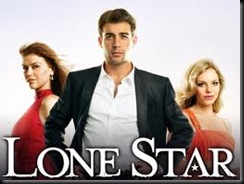
TV Review: Lone Star

lonestar So we’ve got a new crop of television shows clangoring for my attention on Hulu and, just to be polite, I’ve started watching them. As a result, I’m going to review them to see what I thought of each one, and how I felt about them. Lone Star, a drama created by Kyle Killen, portrays the strange life of a con man and his father. Although the premise really strikes me as interesting—I certainly love con man shows and movies like Matchstick Men and White Collar—the pilot failed to hold my interest for very long.

The story sets itself up as the child of possibly the biggest con man in the industry, Robert Allen, works his way through the blue collar and white collar elite alike by bilking them of their hard earned money through selling them snake oil prospects (literally nonexistent energy prospects in oil rigging.) To produce additional drama, he’s running a split con that requires him to keep two separate lives—demonstrated by carrying two separate phones and address books with him. In one life he’s married to a billionaire energy tycoon’s daughter, and the other he has a lovely girlfriend. Both of them don’t know about the other.

Slowly but surely his oil-rig con begins to bleed out as he goes state-to-state seeking would-be investors into the project. Except that there’s no actual holding for them to invest in, so he’s going to have to vanish eventually. Of course, the ties that bind come into play pretty quickly as he happens to like his girlfriend from the oil-rig con and he will one day have to leave her in the dust when he had to quit his hunting grounds if he gets found out.

On the other angle, he seems to be attempting to get into his wife’s family business through her father by getting a job there and then swindling the company out of its vast finances—presumably through some sort of embezzlement. Except this is where things go sideways for his own family business (which happens to be the con) a he decides that he’d rather take this new 7-figure job instead of bleeding the company dry. A fact that his father doesn’t take too well as he’d rather not have his son quit the family con business to take up the mantle of a real energy financier and investment broker. A job that Robert is surprisingly talented at due to his many years tricking people into thinking that he owns a stake in oil and gas drilling.

The real heart cinch of the story that got me happened to be some of the characterization of his father and his own love life—especially how he juggles a girlfriend and a wife.

In one scene, he is propositioned for a one-night-stand by a girl in a hotel lobby who fancies him and invites him back to her room. She gives him a long, convincing argument as to why she should be able to take him to bed and his wife shouldn’t have to know about it. This after Robert first subtly hints, then directly promotes the fact that he is in fact married. At the end of the conversation the woman asks him if he could give one good reason why he couldn’t. And he tells her that he could give her two good reasons. The implied undercurrent here happens to be that those reasons happen to be his wife and girlfriend (between whom he’s cheating on each with the other.) An interesting fact for him as he chooses to keep his fidelity to them, even if they don’t know about each other.

The big spoiler for this episode lays here.

At the very end of the pilot, and near the point where I’d already lost interest, he had a final fight with his father. He’s been found out in his oil-rig scam and has to get out—a fact that means he has to leave his girlfriend behind. Something he doesn’t want to do. His father berates him viciously for forgetting to play his part, pretend to be a character, and not get personally involved in his con. As every con must end and there’s no reason for him to break his own heart while breaking the heart of the girl. However, he’s gotten too involved with his girlfriend. Instead, he finds a way that he can maintain his double life even with danger breathing down his neck.

“Because, Dad, I’m in love.”

“With which one, son?” his father asks. “The fake girlfriend or the fake wife.”

“Both.”

It’s cute, but in the end I’m not as interested in the direction that Robert’s life is taking. It’s keen enough that he has this con going on. His wife’s father is extremely scary and menacing but trusts him honestly. He does life this double life that could fall apart at any moment. But, I don’t know that I want to see where it goes.

I didn’t subscribe to it on Hulu, so I won’t likely be watching further episodes unless one catches my eye.

Friday, November 21, 2008

Bloody hell, Pushing Daisies being canceled

I don't even know how to properly wrap my mouth (fingers) around these words; but it appears that ABC is on the verge of canceling the sublimely wonderful TV show, Pushing Daisies.

This erudite, British-like black comedy done in a similar style to Dead Like Me has been a dramatic source of fun and adoration for me and many of my friends. It's barely gotten its ball rolling and already the network is kicking it to the curb.

Bah.

http://www.tvguide.com/News/Daisies-Eli-Dirty-1000045.aspx